Decluttering After Decades of Accumulation: Where to Start
At some point many people look around their home and realise just how much has quietly accumulated over the years. How did it all build up so gradually?
This rarely happens because someone has been careless or disorganised. More often it reflects a life that has been full. Careers develop, families grow, responsibilities shift, and decisions about belongings are postponed for another day.
Over time those small postponements add up. Cupboards, drawers and spare rooms begin holding far more than we realise.
For many people in midlife and beyond, the question is no longer simply how to declutter. The real question becomes how to begin when everything feels overwhelming.
I understand that moment well.
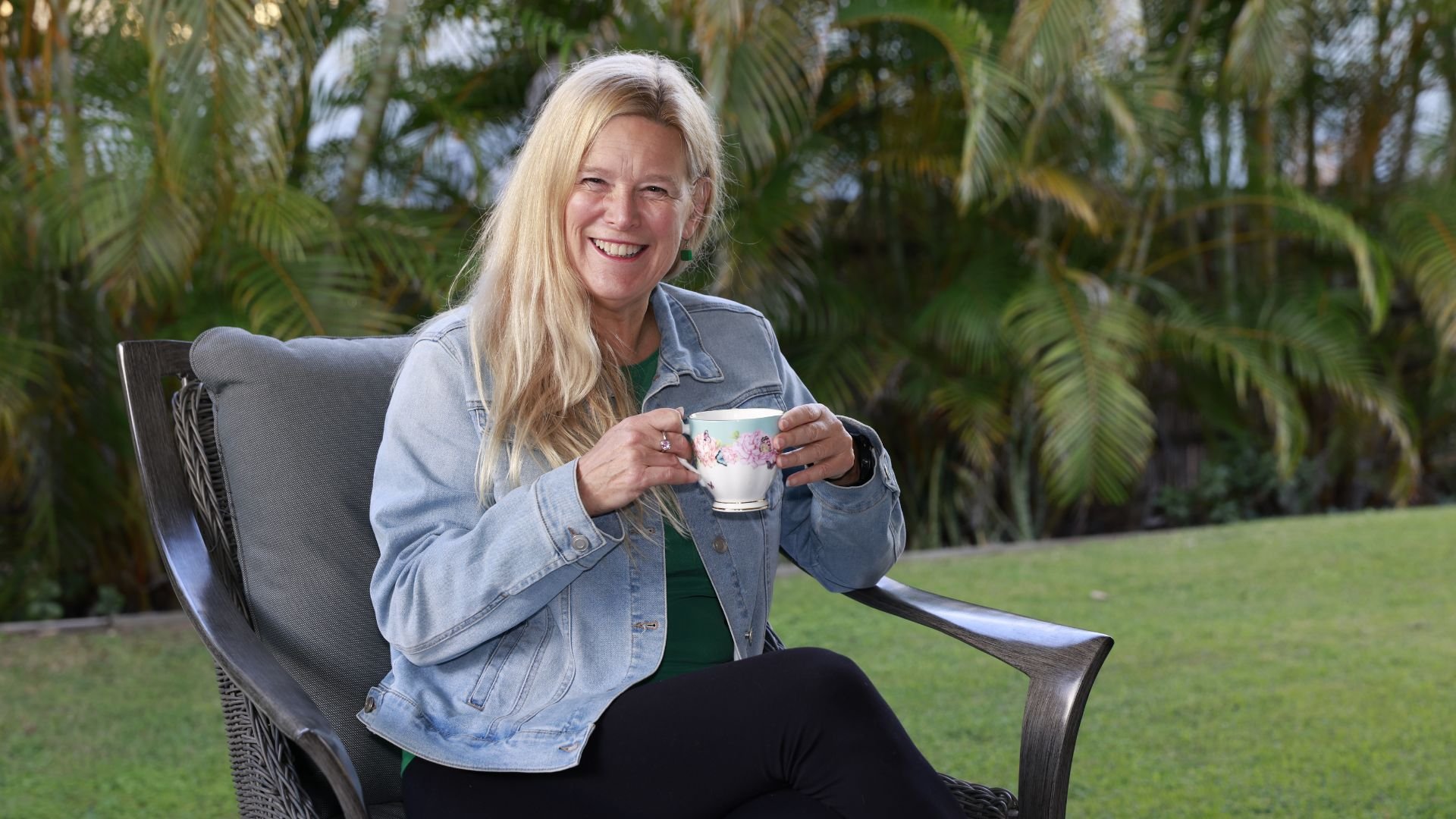
Melinda Ferrier relaxing with a cup of coffee — KonMari consultant and psychologist helping people declutter their homes and lives
A few years ago, after working as a psychologist and later in management, my role was made redundant. What initially felt like disruption became an unexpected sabbatical, and for the first time in years I had room to think.
My home appeared organised from the outside. Yet behind closed cupboard doors were things I had not questioned in years. Clothes were still hanging there for a version of myself I thought I might return to.
Drawers contained decisions I had quietly postponed without noticing. My home office had become a storage room.
My home was full of quiet, unresolved decisions.
That experience is something I now see regularly in my work with clients. Decluttering after decades of accumulation is rarely about a lack of discipline. More often it reflects the natural result of busy lives and postponed decisions.
Why possessions accumulate over decades
Clutter rarely appears overnight. It develops gradually through a series of reasonable choices.
We keep things because they were expensive. We save items that might be useful one day. We hold onto objects connected to meaningful memories. When life is busy, decisions about belongings are easily postponed.
Individually, each of these choices makes sense. Over time they create homes that hold far more than we realise.
When people finally begin sorting through their belongings, the emotional weight of those decisions often becomes clearer.
Kristina, one of my clients, described her experience in a way that has stayed with me. After breast cancer, the terminal diagnosis and loss of her husband, and a prolonged period of grief, she came to the program feeling deeply stuck.
When she began going through her belongings she realised something unexpected.
"Very deep and long ago collective grief was awaiting me," she told me. "I felt stuck and really needed support in letting go and moving on."
Her story is not unusual. In fact, it is something I see frequently. The belongings themselves are rarely the real issue. What people are often working through is the meaning they have placed on those belongings.
Once that layer becomes visible, the process often begins to move forward.
Why decluttering room by room keeps you stuck
When people decide to declutter, they often begin with a room. They start with the kitchen, the spare bedroom, or the garage. While this approach seems logical, it often creates frustration.
Working room by room means we rarely see the full picture of what we own. Items move from one space to another, decisions remain unresolved, and the true volume of possessions remains hidden.
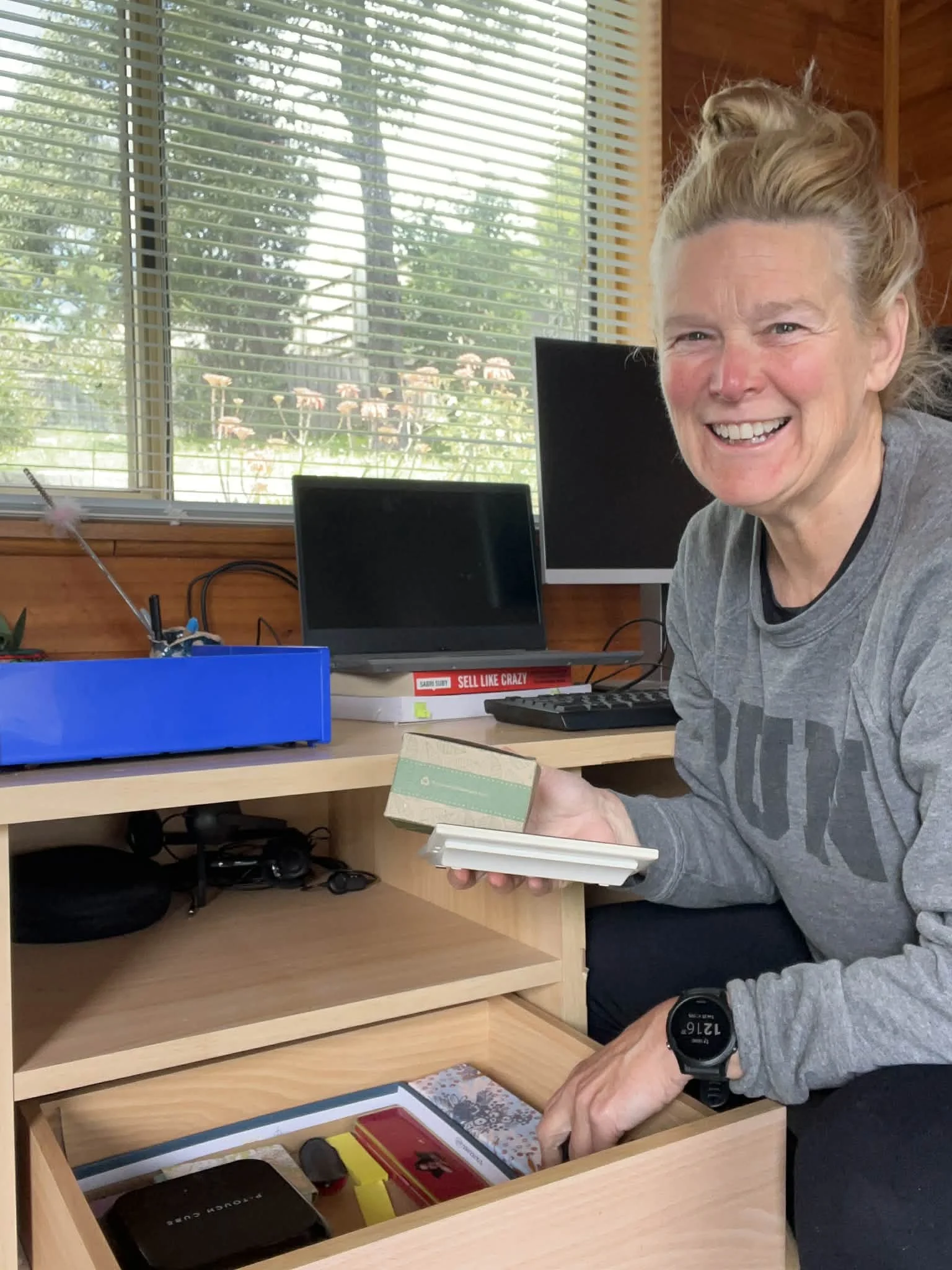
Melinda Ferrier sorting through a home office drawer as part of the KonMari decluttering process
As a certified KonMari consultant, this is the approach I use with every client. Rather than working room by room, the KonMari Method focuses on categories, gathering all similar items together so you can see the true scale of what you own. When everything is visible in one place, decisions become clearer and the process finally starts to feel manageable.
What makes this particularly powerful in my work is the layer my psychology background adds. The KonMari Method asks whether something sparks joy, but when a belonging carries grief, guilt, or a complicated history, that question needs more than a practical answer. Understanding what's underneath the difficulty is often what allows the process to move forward.
For many people, this combination is the moment the process finally starts to feel different from anything they have tried before
What decluttering brings up that nobody warns you about
Many people expect decluttering to be a practical exercise. They imagine it will involve sorting, organising and finding better storage solutions. What they often discover instead is that the process brings up emotions they weren't expecting at all.
Guilt surfaces about money spent on things that were never used. Anxiety appears around the idea of needing something in the future. Some items represent earlier versions of ourselves, plans that never quite unfolded, or relationships we're not sure how to let go of. A box of a late parent's belongings. A wardrobe full of clothes from a career that ended. A hobby room full of equipment for the person you thought you'd become.
These aren't irrational reactions. They're completely human ones. They are also the reason willpower alone rarely works when decluttering. When a decision carries emotional weight, pushing through it by force usually creates more resistance. Understanding what's underneath the difficulty is often what finally allows the process to move forward.
How to start decluttering when everything feels overwhelming
When a home holds decades of possessions, the idea of decluttering the entire house can feel impossible.
A far better place to begin is with something smaller and clearly defined. Clothing, books, or a single drawer can provide a manageable starting point.
Working with a contained category allows you to begin building confidence in your decisions.
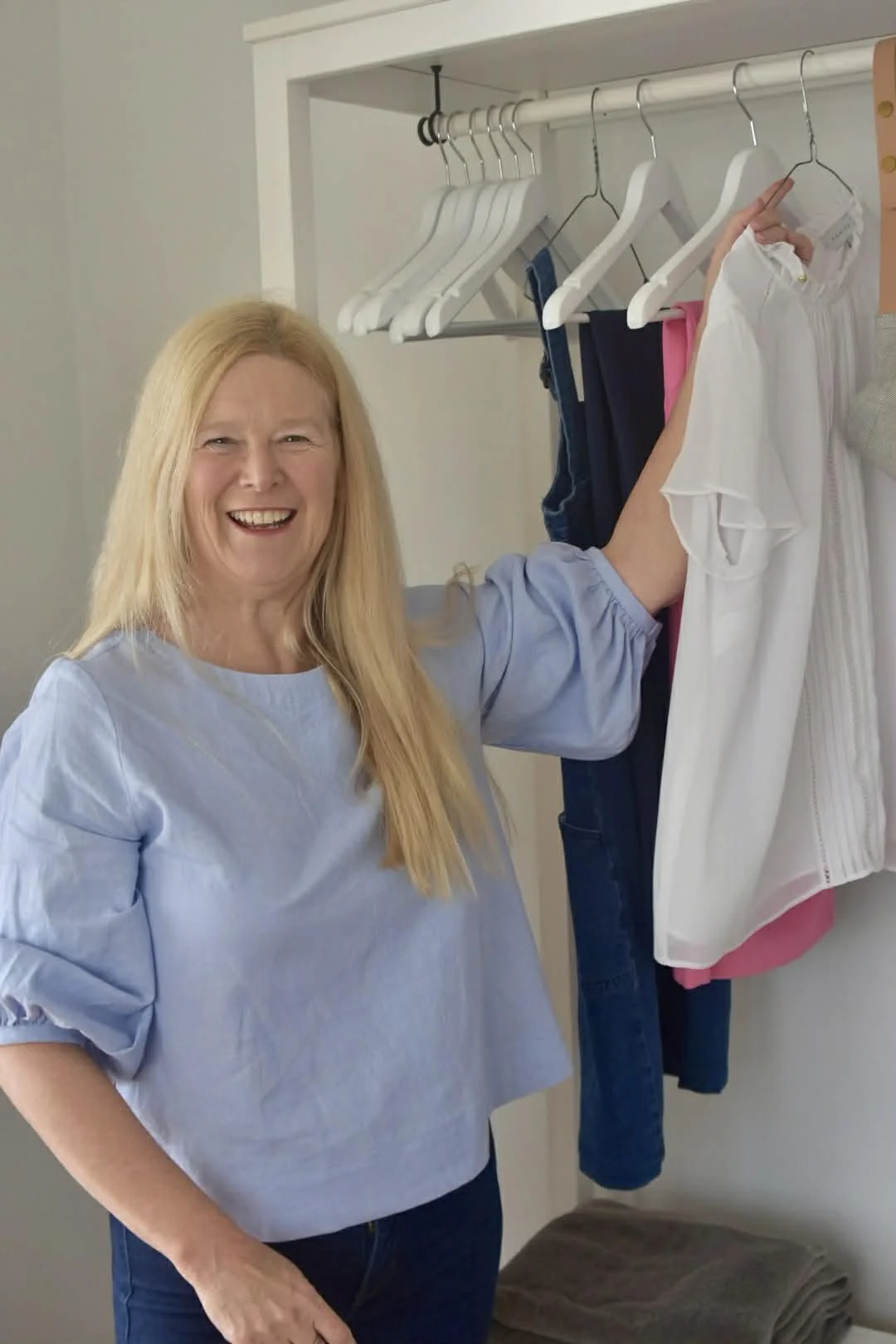
Decluttered wardrobe with white hangers showing the results of the KonMari Method
One of my clients, Joy, had struggled to declutter for years and felt too embarrassed to have visitors in her home. As part of a group exercise I suggested something very simple. Set a timer for fifteen minutes and begin.
What happened surprised even her. She became so engaged and energised that she continued working for several hours and missed lunch entirely. She returned to the group feeling motivated and ready to keep going.
That is the power of starting small. The decision making muscle strengthens with use. What feels difficult at the beginning often becomes far more manageable once momentum begins to build.
What decluttering is really for
Many people approach decluttering with the idea that the goal is to get rid of things.
In reality, the process is about something quite different. It is about becoming clear on what supports the life you want to live now.
When you begin to look at your belongings through that lens, the question changes. Instead of asking whether something should be thrown away, you begin asking whether it deserves a place in your life today.
Angela joined my program with the hope of eventually downsizing into a tiny home. Like many people who begin thinking about downsizing into a smaller home, she realised the real challenge was not the move itself but deciding what to take with her.
By the end of twelve weeks she had moved from a three bedroom house into a studio apartment and was working towards her goal of living in a twenty foot tiny home.
"I didn't realise how much of a positive impact decluttering would have," she told me. "It has changed my life for the better."
Her story reflects something many people discover during this process. When we become clear about what matters, our homes begin to change in ways that often surprise us.
A final thought
If you are looking around your home and wondering where to begin, you are not alone.
Many people reach a stage in life where they realise their homes are holding far more than they need or want.
The good news is that meaningful change does not require tackling everything at once.
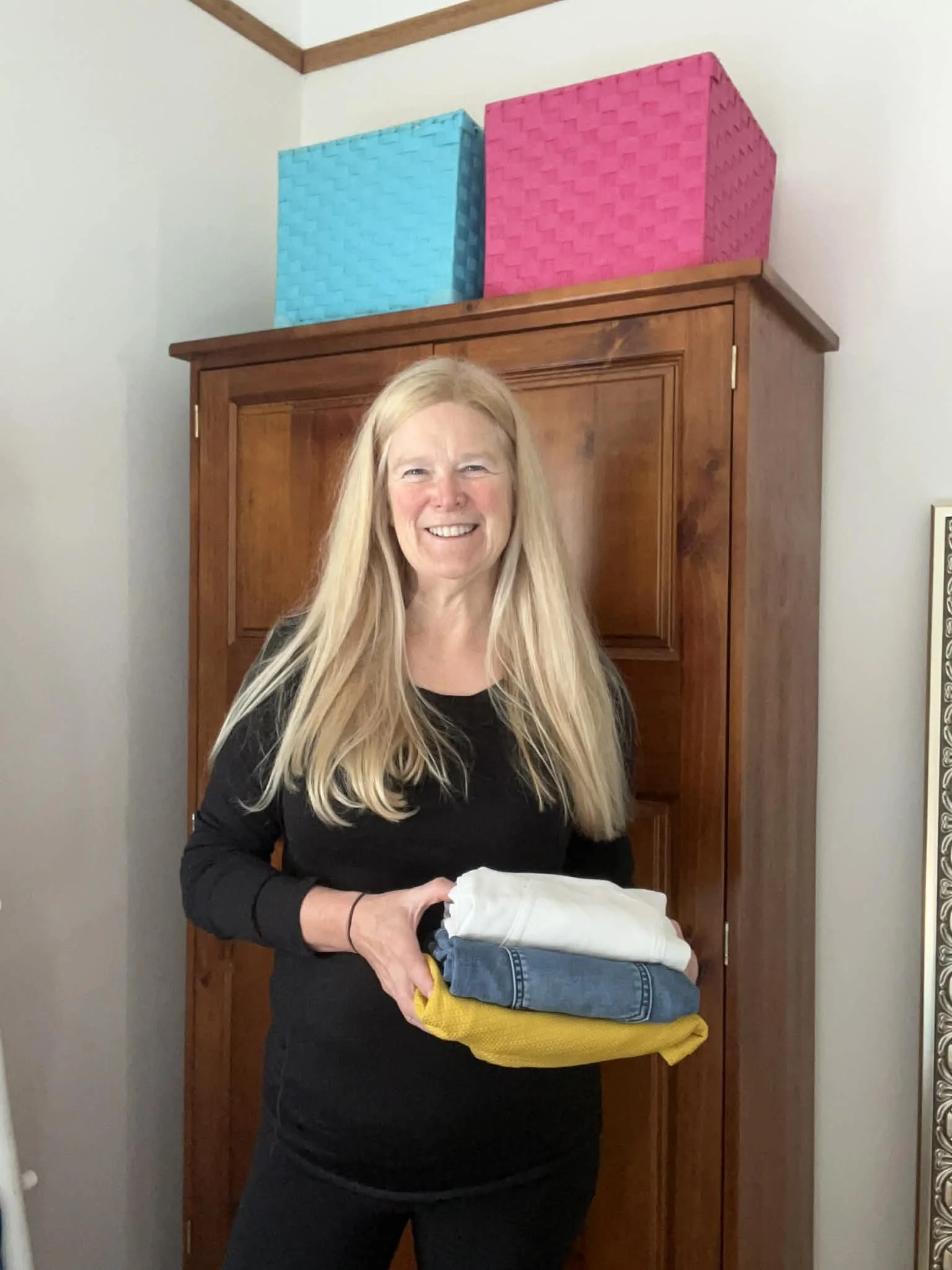
Melinda Ferrier holding neatly folded clothes after completing a KonMari decluttering session
It begins with one category, one decision, and one small step forward.
Over time those decisions create something powerful. A home that reflects the life you want to live now.
As Kristina said at the end of her twelve weeks in the program, "This is the most affirming choice I have made in many years.”
If her words resonate, that feeling is often the best place to start. Not with a perfectly clear plan, but with the quiet sense that something needs to change and the willingness to take one small step toward it. If you'd like support moving through that process, my 12 week Declutter Your Home and Life program offers structured guidance as you work through your home at your own pace."
You can learn more about the Declutter Your Home & Life program here.
Warm regards
Mel
Melinda Ferrier is a certified KonMari consultant and former psychologist based in Launceston, Tasmania. She works with clients in their homes and through online coaching programs, specialising in supporting people in midlife and beyond as they navigate decades of possessions and life transitions.