What to Do With Old Photos: How to Sort, Store and Decide What to Keep.
Recently, my sister was clearing out her house before renting it and uncovered a poster-sized glamour photograph of me.
She had taken it more than 30 years ago when she worked as a PixiFoto photographer. There I was, with big hair, a leather jacket and my chin resting thoughtfully on my hands.
Naturally, she sent me a photo and asked, “What do you want me to do with this?”
My answer was fairly straightforward. “Well, I’m not going to put it up on my wall, so you can throw it out.”
It was a photograph of me, taken by my sister, and it captured a particular time in both our lives. But none of that meant either of us needed to store a poster-sized version of it for another 30 years. We already had the story, and now we also had a digital photograph of the photograph. The oversized original had done its job.
That is something worth remembering when we are sorting through old photos. Keeping the memory does not always require keeping the physical photograph.
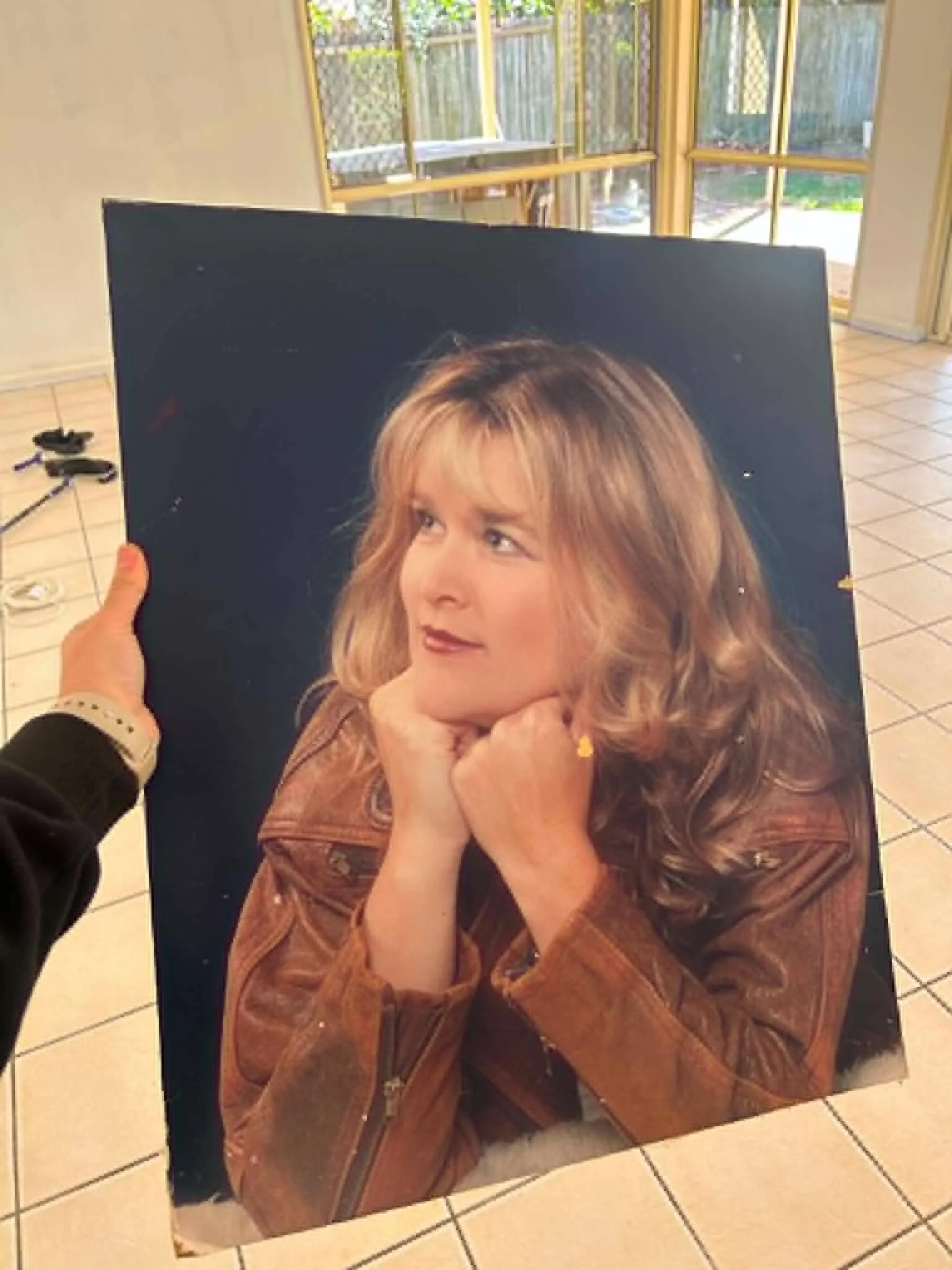
A lovely memory, but not a poster I needed to keep for another 30 years.
Why are old photos so difficult to let go of?
Photographs are different from many of the other possessions in our homes. A chipped mug is usually just a chipped mug, but an old photograph can feel like a piece of our history.
It may remind us of people we love, homes we once lived in, children when they were small, holidays, celebrations, friendships and earlier versions of ourselves. That is why photographs can be surprisingly emotional to sort.
We can also feel a sense of responsibility around them. You may find yourself thinking:
This is the only photo I have of that day.
Someone gave this to me.
What if my children want this one day?
It feels wrong to throw away a photograph of someone.
I don’t remember who these people are, but surely I shouldn’t throw this away.
Before long, the box gets closed again and returned to the cupboard. Not because every photograph in it matters, but because making hundreds of small emotional decisions can feel overwhelming.
Not every old photograph needs to be kept
One of the most useful things to remember is that age does not automatically make something important.
A photograph does not become more meaningful simply because it has survived for 30, 40 or 50 years. You may have duplicates, blurry photos, pictures of scenery you no longer remember, five almost identical photos from the same event, or photographs of people you cannot identify. And then there are the photos that technically contain memories, but are not memories you particularly want or need to preserve.
You are allowed to be selective. The goal is not to get rid of photographs for the sake of having fewer. It is to make it easier to see, enjoy and appreciate the photographs that genuinely matter to you.
Start by gathering your photos together
If you have photographs spread across cupboards, drawers, albums and boxes, it can help to gather them into one place before you start making decisions.
You do not necessarily need to sort every photograph in one sitting. In fact, I would not recommend it. Photo sorting can be mentally tiring because each image may trigger a memory, a story or a decision.
Instead, work in manageable amounts. You might start with:
one photo album
one envelope of prints
one small box
one particular time period
one family member or event
The important thing is to make decisions rather than simply moving the photographs from one container to another.
A simple way to decide what stays
As you look through your photographs, ask yourself a few simple questions.
Would I be glad I kept this photograph?
Some photographs immediately feel important. They may capture a person, relationship, place or moment you genuinely want to remember. If you would be disappointed to lose it, or can imagine enjoying it again in the future, that is a good sign it deserves to stay.
Do I know who or what this is?
If you do not know the people, place or occasion, think about whether there is any real reason for you to continue storing the photograph.
Does this photograph capture a memory I genuinely want to keep?
Some photos immediately transport us back to a moment. Others do very little. Notice the difference and if you have several near-identical shots from the same event, choose the one or two that capture it best.
Would someone else appreciate having this?
Sometimes a photograph means very little to us but could be wonderful to pass on to a sibling, cousin, friend or another family member.
Do I want the physical photograph, or would a digital copy be enough?
This was the question that made the decision about my oversized glamour photo very easy. I did not need the physical object, but I was quite happy to have a digital image and the story attached to it. The same test applies before you digitise, too. If a photo is blurry, meaningless, or one of ten near-identical versions, you probably don't need a digital copy either. It's easy to turn a box of physical clutter into thousands of digital files nobody ever looks at, so digitise the photos you genuinely value, not everything simply because you can.
What about inherited photographs?
Inherited photographs can be especially difficult.
You may become the keeper of photographs that once belonged to your parents or grandparents, including people you never knew. There can be a strong sense that throwing away the photograph somehow means throwing away the family history.
But you do not have to become the permanent custodian of every photograph that belonged to someone else.
Before discarding inherited photographs, consider whether another family member might want them. If people are unidentified, this can also be a good opportunity to ask older relatives if they know who is pictured.
If no one knows who the people are, no one else wants the photograph and it holds no meaning for you, it is okay to let it go. You can honour your family history without keeping every single piece of it.
Keep the photos you love in a way that lets you enjoy them
Once you have sorted your photographs, think about how you want to keep the ones that matter. There is little joy in having treasured photos buried at the bottom of a box that nobody opens.
You might choose to:
create a small number of meaningful albums
use archival photo boxes
frame a few favourites
create a digital photo book
share copies with family members
scan particularly important photographs
Whatever method you choose, the aim is the same: you want the photographs you have deliberately kept to be easy to find, protect and enjoy.
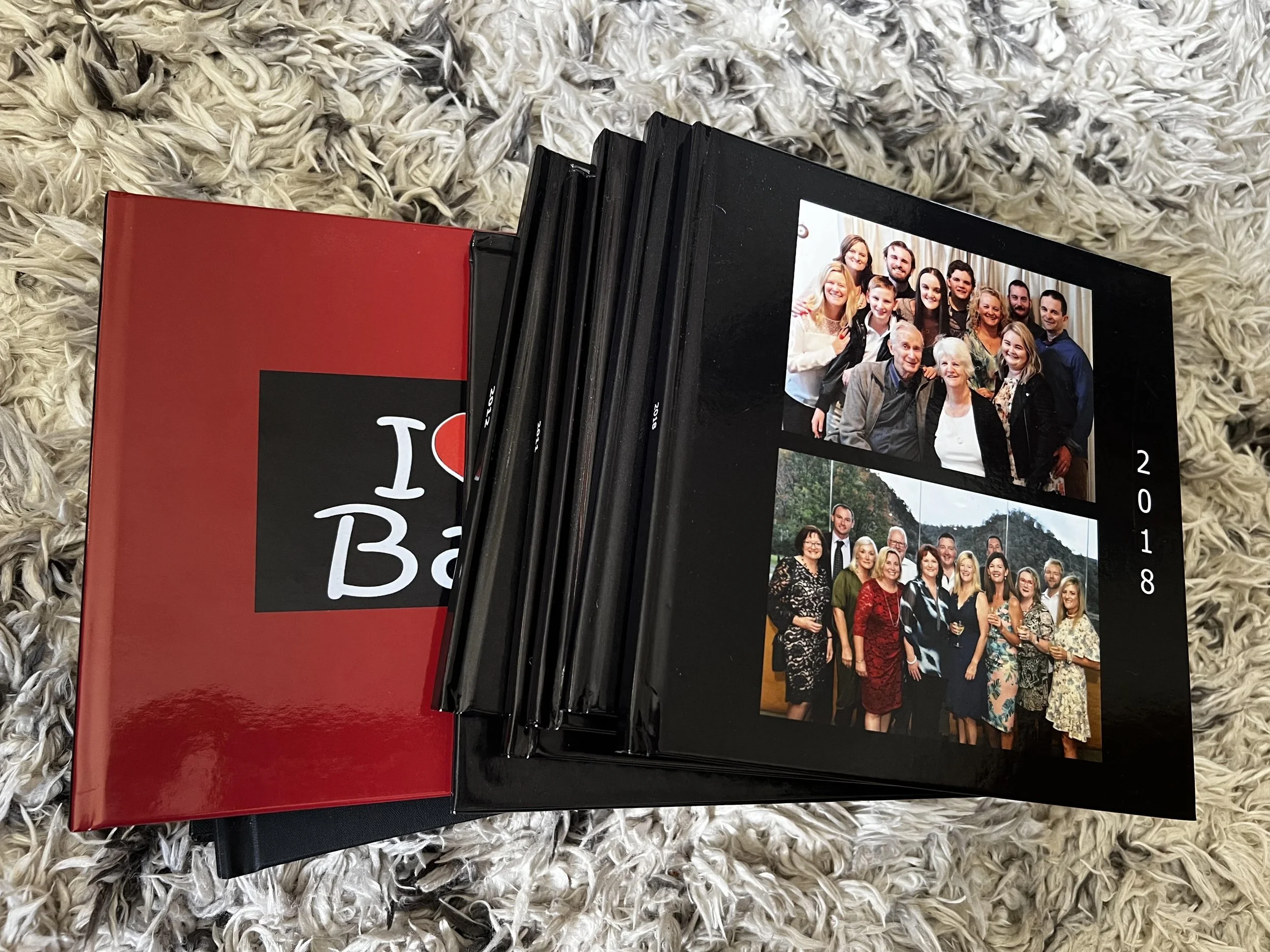
These photo books hold some of my favourite memories and make them much easier to enjoy than photos hidden away in boxes.
You are choosing the story you want to keep
Decluttering photographs is not about erasing your past. It is about deciding which parts of that past you want to carry forward.
When I looked at that oversized glamour photograph, I did not think, I want to forget this. Quite the opposite. It made me laugh and reminded me of my sister’s time as a photographer, of a younger version of myself, and apparently of a time when I thought a leather jacket, very big hair and a thoughtful pose were an excellent combination. I enjoyed the memory. I just did not need the poster.
Not every photograph needs to be preserved forever simply because it has survived until now. Sometimes you can look at it, remember the story, share it, take a digital copy if you want to, and then let the physical photograph go.
The memory can stay, even when the photograph does not.
About the author
Mel Ferrier is a Professional Organiser, Certified KonMari Consultant and former psychologist who helps overwhelmed midlifers and beyond declutter, downsize and simplify their homes with confidence.
Through her in-home services, coaching programs and practical resources, Mel helps people move beyond the overwhelm, guilt and indecision that can make letting go so difficult, creating calmer, easier-to-manage homes and more space for the next chapter of life.
Feeling stuck with your own clutter?
Sometimes the hardest part of decluttering is not knowing what to do, but understanding why it feels so difficult to let go.
My free 2-minute self-assessment, What’s Really Keeping You Stuck With Clutter?, will help you uncover what may be getting in the way and give you a clearer idea of what to focus on next.
Take the free 2-minute self-assessment
Need more support?
If you’d like practical help to make decisions, declutter a space or work out where to start, you canexplore ways to work with me here.